"What You Hold Up Matters: Selecting Stimuli for the VB-MAPP"
Oct 5, 2026

DataMTD Team
March 21, 2026

You've probably seen the debates around which assessment tool BCBAs should be using. So what does the evidence actually say?
As the team who works closely with the VB-MAPP every day - and who built the only authorized digital VB-MAPP platform in collaboration with Dr. Mark Sundberg - we think it's worth cutting through the noise and looking at the facts.
The Verbal Behavior Milestones Assessment and Placement Program (VB-MAPP) is a criterion-referenced assessment, curriculum guide, and skill-tracking system designed for children with autism and other developmental disabilities who demonstrate language delays. It was developed by Dr. Mark Sundberg, Ph.D., BCBA-D - a licensed psychologist with over 40 years of experience in applied behavior analysis and a leading authority on Skinner's analysis of verbal behavior.
The VB-MAPP evaluates 170 milestones across three developmental levels (0-18 months, 18-30 months, and 30-48 months), covering skills like manding, tacting, listener responding, intraverbal behavior, social skills, and play. But it doesn't stop at milestones. It also includes a Barriers Assessment that identifies 24 common obstacles to learning, and a Transition Assessment that helps determine whether a child is ready for less restrictive educational settings.
What makes the VB-MAPP distinctive is its foundation. It's grounded in B.F. Skinner's 1957 analysis of verbal behavior, established developmental milestones, and decades of behavior-analytic research. It doesn't just measure what a child can say - it measures the function of their language: why they're communicating, not just how.
This is where the VB-MAPP truly separates itself. Few assessment tools in the ABA field can match the depth of its research base.
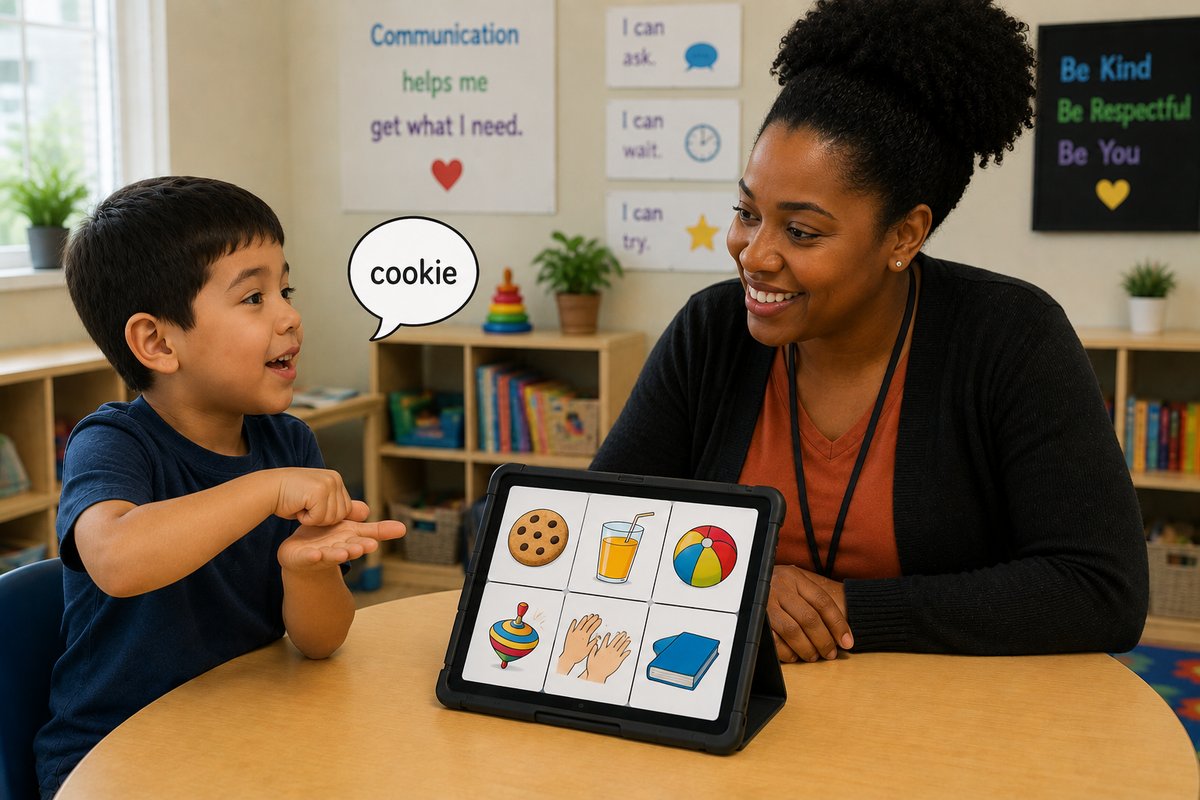
A landmark 2010 study by Esch, LaLonde, and Esch reviewed 28 commonly used speech and language assessments for children with autism. Their finding was striking: 26 of the 28 tools evaluated only the form of a child's responses without considering the function - meaning they could tell you a child says "cookie," but not whether they're requesting it, labeling it, or simply echoing someone else. The VB-MAPP was highlighted as one of the few assessments that includes a true functional analysis of language, including a mand (requesting) assessment component.
A similar 2011 study by Gould, Dixon, Najdowski, Smith, and Tarbox reviewed 30 assessment tools - including the ABLLS-R, Bayley, Brigance, and many others - against five comprehensive criteria for early intensive behavioral intervention. Out of all 30, only four met the researchers' criteria. The VB-MAPP was one of them.
The psychometric evidence continues to grow. A content validity study published in the Journal of Autism and Developmental Disorders found moderate to strong validity evidence across the VB-MAPP's Milestones, Early Echoic Skills Assessment, and Barriers Assessment. A separate convergent validity study examining 235 children with autism found strong positive correlations between VB-MAPP Milestones scores and the well-established Vineland Adaptive Behavior Scales - a widely recognized standardized assessment. And a 2024 principal components analysis demonstrated that the VB-MAPP shows excellent internal consistency and can capture nuanced improvements resulting from ABA therapy across multiple developmental domains.
Beyond these validation studies, dozens of peer-reviewed publications have used the VB-MAPP as a measurement tool in intervention research - further cementing its role as a trusted instrument in the field.
There's a common misconception that the VB-MAPP is only widely used because insurance companies mandate it. The reality is more nuanced.
No major insurer mandates the VB-MAPP as the only acceptable assessment tool. What insurers require is an evidence-based, criterion-referenced skills assessment that establishes baselines, demonstrates medical necessity, and tracks measurable progress. Major payers like Aetna, for example, list the VB-MAPP alongside other tools like the ABLLS-R and ABAS-3 as acceptable options. The specific requirements vary from payer to payer, and practitioners should always verify with each funder.
So why is the VB-MAPP so prevalent in insurance documentation? Because its structure - clear milestone scoring, visual charts, measurable criteria, and built-in progress tracking - naturally produces exactly the kind of data that supports authorization and reauthorization. The VB-MAPP didn't become widely accepted because insurance forced it on the field. It became widely accepted because it was built to produce meaningful, measurable outcomes - and that's exactly what good clinical practice (and funders) demand.
One of the things we're most proud of in our work with the VB-MAPP is that it isn't a static tool. The ecosystem around it continues to grow and improve.
The EESAPP (Early Echoic Skills Assessment and Program Planner): Dr. Barbara Esch, Ph.D., CCC-SLP, BCBA-D - a contributing author to the VB-MAPP - originally developed the Early Echoic Skills Assessment (EESA) as a component within the VB-MAPP. She has since expanded it into the standalone EESAPP, which includes a revised assessment (the EESA-R), a comprehensive program planning guide, work packets, and sample IEP goals. The EESAPP provides practitioners with detailed guidance on assessing and building early speech skills - a critical area for many early learners. For those looking for an in-depth resource on echoic assessment and speech programming, Dr. Esch's EESAPP Guide and Protocol is an excellent companion to the VB-MAPP.
The Generative Learning Assessment (GLA): Dr. Sundberg and his team are currently developing a supplemental assessment tool - the VB-MAPP Generative Learning Assessment - designed to measure a child's capacity for generative verbal and nonverbal learning. Generative learning occurs when existing skills enable the acquisition of new skills without direct teaching, and it's central to the kind of language explosion that typically developing children experience between ages 2 and 3. Many children with autism struggle with exactly this leap, and the GLA aims to identify where those generative learning capabilities are breaking down. While still in development, this addition has the potential to significantly enhance the VB-MAPP's clinical utility, particularly for learners working through Levels 2 and 3.
Here's the thing: the VB-MAPP was never meant to be the right tool for every learner. Dr. Sundberg designed it specifically for early learners - developmentally, children functioning roughly between 0 and 48 months. For older learners, individuals with more significant support needs, or those focused on functional living skills, other assessments like the Essential for Living (EFL), ABLLS-R, AFLS, or PEAK may be more appropriate.
It's also worth noting that Dr. Sundberg co-authored the original ABLLS with Dr. Partington before creating the VB-MAPP. He didn't develop the VB-MAPP in isolation from other tools - he built on his own prior work to create something more focused and efficient for early language assessment.
The real clinical question isn't "which assessment is trending?" - it's "which assessment is right for this learner?" That's a decision that should be guided by the learner's age, developmental level, skill profile, and the goals that matter most to them and their family.
If you're unsure where to start, we built a free Assessment Navigator that walks you through 15 questions about your learner and recommends from the VB-MAPP, ABLLS-R, EFL, AFLS, or PEAK. It takes about 2-3 minutes, and it's designed to support - not replace - your clinical judgment.
The VB-MAPP has earned its place in the field not because of trends or mandates, but because of decades of research, thoughtful design, and a commitment to meaningful outcomes for the children and families we serve. And it's still evolving.
https://www.researchgate.net/publication/236200018_Speech_and_Language_assessment_A_verbal_behavior_analysis
https://pmc.ncbi.nlm.nih.gov/articles/PMC6269380/
https://link.springer.com/article/10.1007/s10803-020-04864-y
Written by
DataMTD Team
The team behind the VB-MAPP Online and Essential For Living Online
Explore our resources and training programs for ABA professionals, educators, and parents.