It's the Match That Matters: Reinforcing Honest Self-Monitoring with Self & Match
Oct 13, 2026
Liz Maher
April 20, 2026
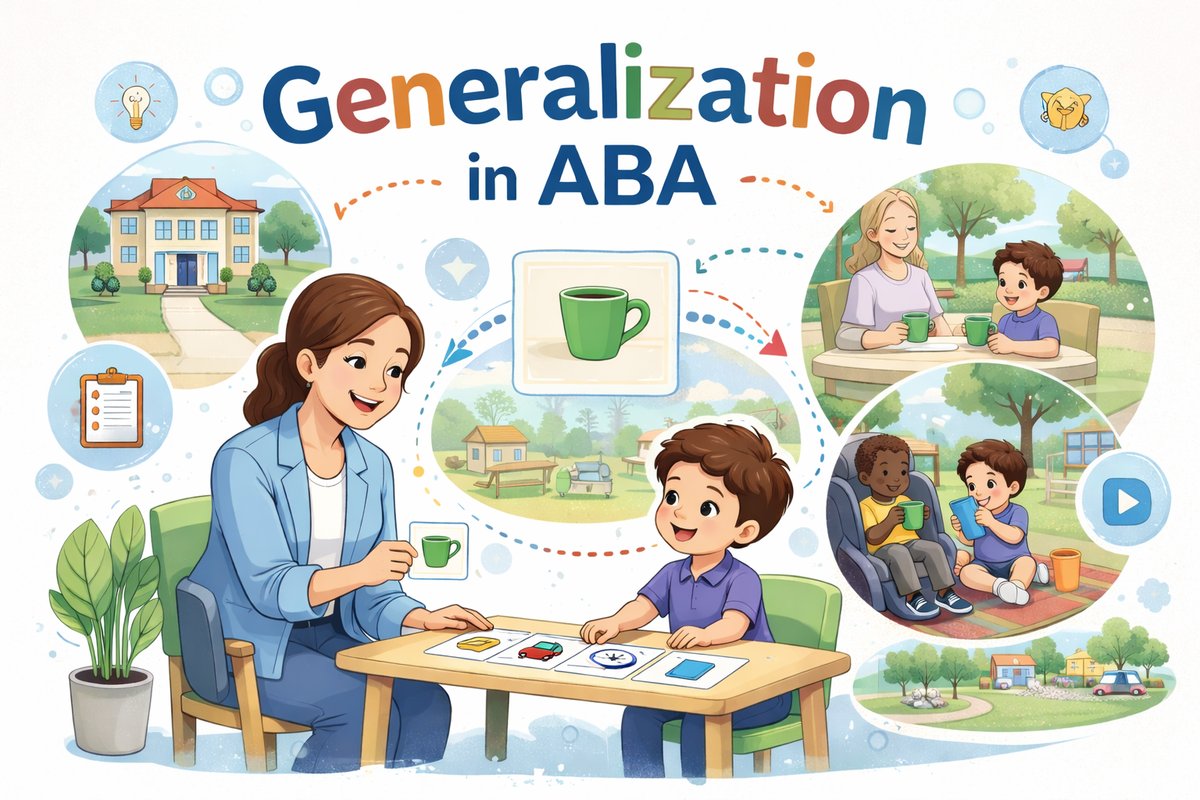
Let's talk about something that I think every behavior analyst has wrestled with at some point: you teach a skill, the learner masters it in session, the data look great... and then you find out it's not showing up anywhere else. Not at home. Not at school. Not with other people. The skill lives and dies at the therapy table.
It's frustrating. And honestly, it's one of the most common challenges in ABA programming. But here's the thing: generalization isn't something that just happens on its own. It's something we have to actively plan for. And ideally, we should be building it into our teaching from the very beginning, not treating it as an afterthought once a skill is "mastered."
So let's dig into what generalization really means, why it breaks down so often, and what we can do differently to set our learners up for success in the real world.
In behavior analysis, generalization refers to the occurrence of a behavior under conditions that differ from the original training conditions. Stokes and Baer published their landmark 1977 paper on this topic (https://onlinelibrary.wiley.com/doi/abs/10.1901/jaba.1977.10-349), and it's still one of the most cited and relevant pieces of literature in our field. They outlined several strategies for promoting generalization, and their core message still holds: if we want behavior to generalize, we need to program for it. Hoping for it isn't a strategy.
There are a few different types of generalization we're usually thinking about:
Stimulus generalization: The learner performs the skill in the presence of new stimuli (different materials, settings, or people).
Response generalization: The learner demonstrates variations of the trained response (using different words to make the same request, for example).
Maintenance: The skill continues to occur over time, even after direct teaching has been reduced or faded.
All three matter. And all three require intentional planning.
An additional note: The Generative Learning Assessment (GLA) and Generative Learning Curriculum (GLC), currently being developed by Dr. Mark Sundberg in collaboration with leading experts in the field (meant to be an additional tool to the current VB-MAPP, include evaluation of both stimulus and response generalization within Level 2 of the GLA. While these tools are still undergoing one to two more years of research and field testing, they highlight something clinicians can act on right away - the critical role of these repertoires in the development of generative learning, or the ability to learn without direct instruction.
I think there are a few common reasons generalization doesn't happen the way we'd like, and most of them come down to how tightly controlled our teaching environments tend to be.
First, there's the issue of over-reliance on massed trials in a single context. When we teach a skill at a table, with the same materials, the same instructor, the same SD, and the same reinforcer every time, we're inadvertently teaching the learner that this skill belongs to that specific set of conditions. The learner isn't being inflexible or stubborn. They've just learned exactly what we taught them, which is to demonstrate the skill under those exact circumstances.
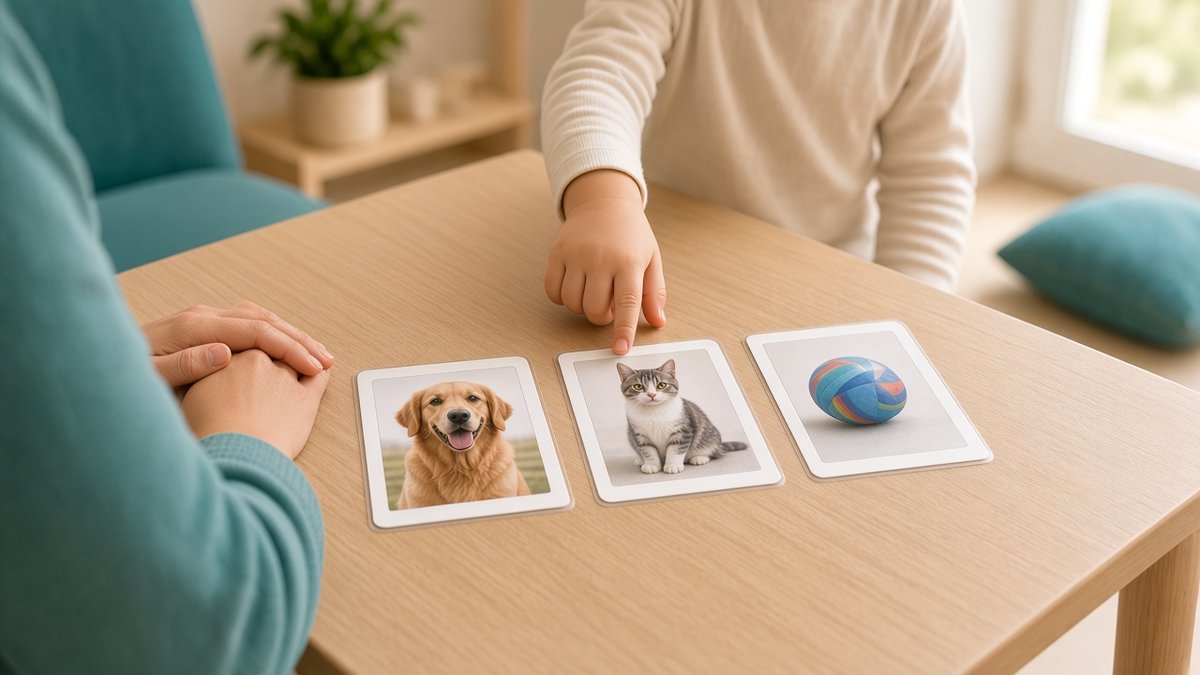
Second, there's insufficient variation in training exemplars. If a child learns to tact "dog" using three flashcard images, they may not recognize a real dog at the park. That's not a failure of learning. That's a failure of programming.
Third, and this is a big one: we sometimes wait too long. We teach to mastery in one context, then try to generalize. But by that point, the behavior has become so tightly linked to the original teaching conditions that expanding it feels like starting over. Programming for generalization from the beginning can actually make initial acquisition smoother, not harder.
So what does it look like in practice to program for generalization from day one? Here are some strategies I've found effective, both in my own clinical work and in the literature.
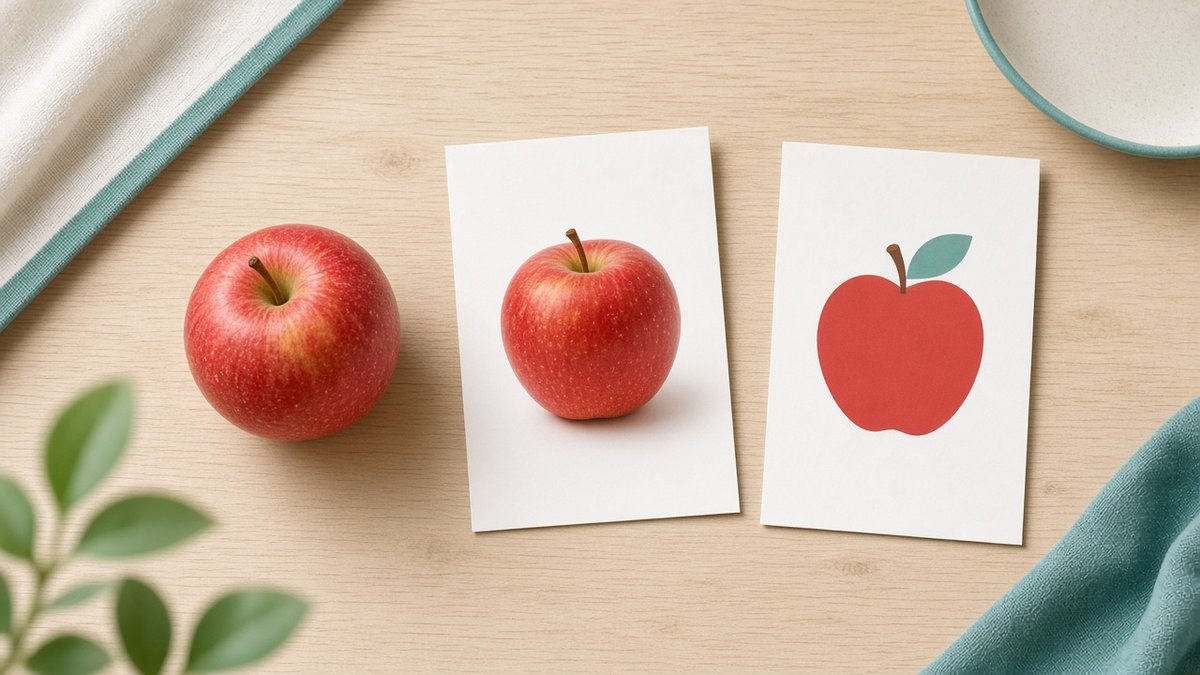
This is probably the most well-supported strategy we have. Instead of teaching a concept with one or two examples and then expanding later, start with variety. If you're teaching a learner to tact "cup," use different cups from the beginning: a plastic sippy cup, a ceramic mug, a paper cup, a red cup, a blue cup. Vary the size, color, and material so the learner contacts the relevant features of the concept rather than memorizing one specific image.
The same principle applies to social skills, play skills, and intraverbals. If you're teaching a child to answer "What do you like to eat?" don't accept only one response and call it mastered. Teach multiple responses and teach them to vary (also here remember in order for that intraverbal to "make sense", the learner needs to be able to tact lots of favorite foods, tact and demonstrate the action of "eating")
If a skill is only ever taught in one room by one person, that's what the learner associates with the skill. From the start, try to rotate instructors, move sessions to different locations (even just different rooms in the same building), and practice in natural environments when possible.
This is also where parent involvement becomes so critical. When parents are trained to run targets at home, in the car, or at the store, they're not just getting extra practice reps. They're providing the variation that makes generalization possible. (If you haven't already, take a look at our post on Teaching the Whole Child for more on this.)
Contrived reinforcement can be helpful during acquisition, but it doesn't exist in the natural environment. If a child learns to tact an item but only does so because they get a token, what happens when there's no token system at school? Whenever you can, pair your teaching with the natural consequences of the behavior. A mand for "juice" should result in getting juice. A greeting should result in a social response. The closer your teaching matches the real world, the more likely the skill will transfer.
This is one of Stokes and Baer's original recommendations, and it's a good one. Teaching loosely means intentionally varying the non-critical aspects of your instruction: your tone of voice, your position in the room, the time of day, the phrasing of your instructions. You're keeping the target skill consistent while varying everything around it. This helps the learner discriminate what's actually relevant and ignore the irrelevant contextual details.
I know this can feel counterintuitive, especially for newer clinicians who've been trained to keep everything consistent and controlled. And there's a time for that level of structure, particularly during initial acquisition of very difficult skills. But for many targets, a little looseness from the start goes a long way.
Another practical strategy: make your teaching environment share features with the learner's natural environment. If a child is going to need to follow instructions at school, use the same types of materials, seating arrangements, and group formats they'll encounter there. If you're teaching a skill that needs to happen at home, find out what home actually looks like. What's the routine? What materials are available? The more overlap between training and the real world, the easier the transfer.
One of the things I appreciate about the VB-MAPP is that generalization isn't treated as separate from skill acquisition. When you look at the milestones, many of them require generalization as part of the criterion. A learner doesn't get credit for tacting 50 items if they can only do it with one instructor using flashcards. The assessment is designed to push clinicians toward testing across conditions.
The Barriers Assessment also flags issues related to generalization directly. If a learner demonstrates prompt dependency, restricted stimulus control, or limited response variability, those are signals that your programming may need more built-in variation. Use those signals. They're telling you something important. With EFL the whole curriculum is designed to be taught loosely (if possible), and where the skills occur in daily life.
Ultimately, I think programming for generalization requires a mindset shift. Instead of asking, "Has the learner mastered this skill?" we should be asking, "Can the learner use this skill in their life?" Those are two very different questions, and the second one is the one that matters most to families.
A child who is working on skills in the VB-MAPP, and can label 200 items in a flashcard binder but can't comment on what they see at the playground hasn't truly acquired functional tacting. A child who can sit through a structured social skills group but can't navigate a conversation with a peer at recess still needs support. Mastery criteria should reflect real-world use, not just session performance.
This doesn't mean we throw structure out the window. It means we build our programs with the end in mind. We ask ourselves, from the very first session: where does this skill need to show up? Who does the learner need to use it with? What does it look like when it's truly functional?
When we start there, everything else follows.
Written by
Liz Maher
Liz Maher, MEd, BCBA, is an experienced Board Certified Behavior Analyst who provides consulting services to educational institutions and is the parent of a young adult with autism.
Explore our resources and training programs for ABA professionals, educators, and parents.