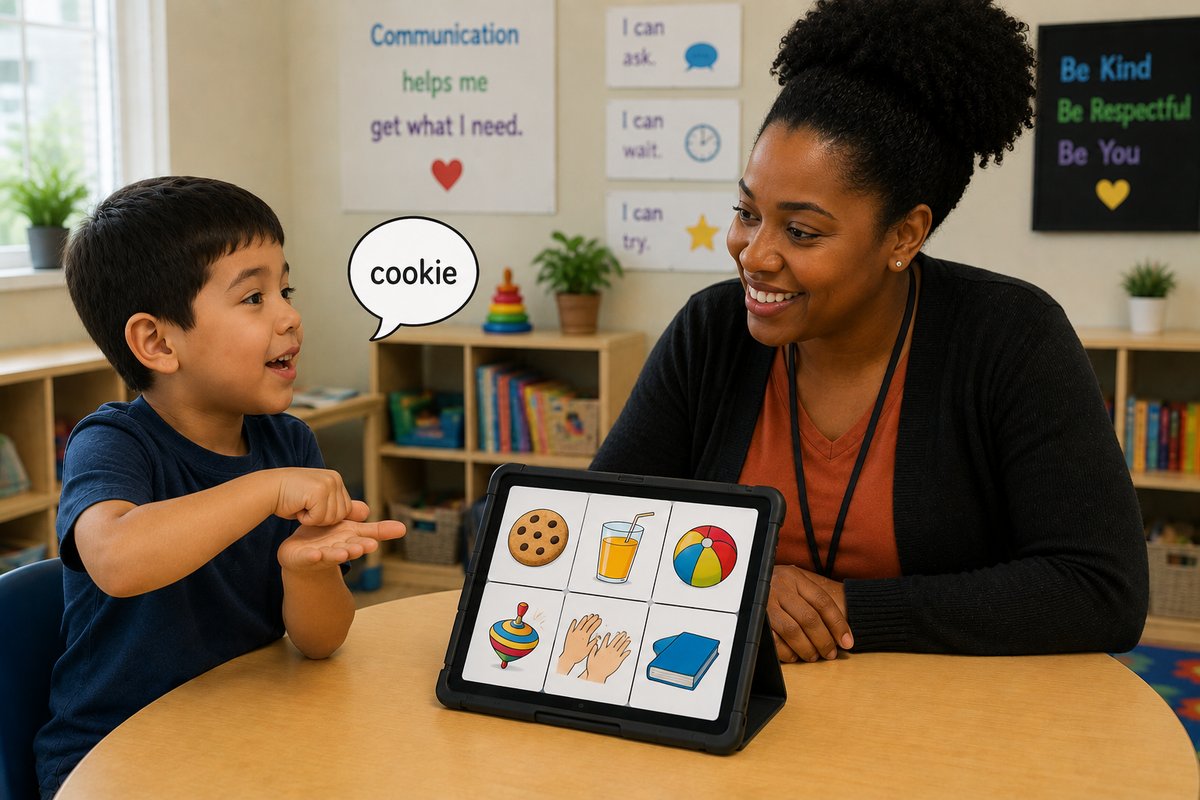
"What You Hold Up Matters: Selecting Stimuli for the VB-MAPP"
Oct 5, 2026

Liz Maher
April 6, 2026
Here’s something I think most of us in the ABA field know intuitively but don’t always talk about enough: the hours a child spends in therapy are just a fraction of their waking life. The rest of the time? They’re at home, at the grocery store, at grandma’s house, at the park - surrounded by the people who love them most. And those people, especially parents and caregivers, have an enormous impact on whether the skills we’re teaching actually stick.
Parent involvement isn’t a nice-to-have. It’s not a box to check on a treatment plan. It’s one of the most powerful variables we can leverage in ABA therapy - and the research backs that up. So let’s dig into why it matters so much, what gets in the way, and how we can do it better.
Before we do, I want to share something important about my perspective. I’m not only a clinician — I’m also the parent of a now 30-year-old daughter with autism. So while I deeply believe in this work, I also understand, on a very real level, what parents are juggling day in and day out. That dual perspective shapes how I think about parent collaboration in a big way.
The evidence on parent-implemented intervention in ABA is pretty compelling. Multiple studies have shown that when parents are trained in behavior-analytic strategies - things like reinforcement, prompting, and naturalistic teaching - their children show greater gains in communication, social skills, and adaptive behavior compared to children who receive clinic-based services alone.
A well-known 2015 study published in The Lancet (the PACT trial) found that parent-mediated intervention for children with autism led to sustained improvements in social communication that were still measurable six years later. Six years. That’s the kind of long-term impact we’re all striving for.
And it makes sense when you think about it. Parents interact with their child across dozens of natural contexts every single day. They’re present during mealtimes, bedtime routines, play, transitions, and all those unstructured moments where real-life learning happens. If a parent knows how to prompt a mand during snack time, or how to reinforce spontaneous tacting on a walk around the neighborhood, they’re creating hundreds of additional learning opportunities that no therapy schedule could ever replicate.
If you’ve been in this field for a while, you’ve seen it happen: a learner masters a skill in the clinic - let’s say they’re tacting 50 items with no prompts - but at home, those same skills seem to disappear. The parents are frustrated. The therapist is confused. And the child is stuck in a gap between what they can do and what they actually do in their everyday life. This is the generalization problem, and it’s one of the biggest challenges in ABA. We can teach skills all day long in structured settings, but if those skills don’t transfer to natural environments, with natural communication partners, we haven’t really done our job. Parent involvement is one of the most effective solutions to this problem. When parents understand the principles behind what we’re doing — not just the procedures, but the why — they become active agents of generalization. They can carry strategies across settings, people, and materials in ways that even the best-designed therapy session can’t fully capture.
Now, I want to be honest here - because I think sometimes we talk about parent training like it’s simple, and it’s really not. There are real barriers that get in the way, and if we don’t acknowledge them, we’re not going to solve them.
First, there’s the time factor. Many parents are juggling work, other children, household responsibilities, and the emotional weight of navigating a diagnosis. Asking them to sit through lengthy training sessions or implement detailed protocols at home can feel overwhelming - even when they desperately want to help.
Second, there’s the jargon problem. We throw around terms like “extinction,” “differential reinforcement,” and “motivating operations” without always stopping to check whether our audience understands what we mean. If a parent leaves a training session more confused than when they walked in, that’s on us, not them.
Third — and this is a big one — there’s the relationship dynamic. Parents are not technicians; they’re parents. They have an emotional connection to their child that is fundamentally different from a therapist’s relationship. Because of that, some of the strategies we recommend (like ignoring problem behavior during an extinction procedure) can feel deeply counterintuitive, and at times even distressing. That experience deserves acknowledgment and respect. And while these procedures can be effective and appropriate in some cases, it’s also important to recognize that they can be challenging for everyone involved. In some situations, it may be worth considering whether alternative ABA strategies or adjustments could better support both the child and the family.
And from my perspective as a parent, I can say this clearly: even when you understand the science, it doesn’t make those moments easy. Knowing what to do and actually doing it consistently in real life are two very different things.
So what does effective parent involvement look like in practice? Here are some strategies that I’ve seen make a real difference:
1. Start Where the Family Is: Before you launch into training, take the time to understand the family’s priorities, routines, and concerns. What matters most to them? Maybe the BCBA’s top priority is building intraverbal skills, but the parent is most concerned about their child being able to ask for help at school or sit through a family dinner. When you align your goals with the family’s values, buy-in happens naturally.
2. Teach Principles, Not Just Procedures: Instead of handing a parent a step-by-step protocol and hoping for the best, help them understand the underlying principles. When a parent understands why we use positive reinforcement - not just how - they can adapt and apply that knowledge flexibly across situations. That’s where the magic happens.
3. Use Plain Language: This one seems obvious, but it’s worth saying: drop the jargon. Or at the very least, translate it. Make it accessible.
4. Model, Practice, Feedback: The most effective parent training follows a behavioral skills training (BST) model: explain the strategy, demonstrate it, let the parent practice, and give them supportive feedback. This isn’t about lecturing - it’s about doing it together.
5. Make It Manageable: Focus on what’s doable. Rather than asking parents to implement many strategies at once, start with one or two that are likely to make the biggest difference.
It’s also important to recognize the realities parents are navigating. After a long day and all the responsibilities they carry, it can be hard to consistently pause, prompt, and follow through in every moment - even when they understand exactly why it matters. That’s not a lack of follow-through; it’s real life. With that in mind, it can help to start even smaller. For example, you might collaborate with the parent to focus on just one meaningful opportunity-like having the child mand for a favorite item-while keeping other routines as they are for now. Other items can still be given the way the parent naturally would-whether that’s anticipating the child’s needs or allowing the child to access items independently. This keeps things manageable, supports consistency, and still creates a meaningful learning opportunity. Often, those small, successful moments build momentum and naturally lead to more opportunities over time.
6. Check In Regularly: Parent training isn’t a one-and-done event. It’s an ongoing conversation. And just as importantly, it’s a relationship.
Here’s where tools like the VB-MAPP and EFL become especially valuable. When you share assessment results with parents - in an accessible, visual way - it helps them see the big picture.
When parents understand the assessment, they become better advocates - for their child, and for the services their child needs.
At the end of the day, we’re all working toward the same thing: meaningful progress for the learner.
As BCBAs, RBTs, and educators, we have an incredible opportunity - and responsibility - to empower parents. Not to turn them into therapists, but to support them in ways that actually fit into their lives.
And from someone who has lived both roles - clinician and parent - I can say this: when we truly respect both perspectives, that’s when the best outcomes happen.
Because therapy sessions end. But a parent’s influence? That’s 24/7, 365 days a year. And when we invest in that relationship, everybody wins - especially the child.
Are you a BCBA or clinic director looking for better ways to share assessment data with families?
The VB-MAPP App and EFL App makes it easy to turn assessment data into clear, visual reports that parents can truly understand-helping bridge the gap between clinical insight and meaningful family collaboration. As part of the the VBMAPP App, families and team members also get free access to our ABA100 training just by creating an account. Whether you’re looking for a quick overview or a deeper dive, this self-paced course can be completed in as little as 30 minutes or explored over a few hours.
Written by
Liz Maher
Liz Maher, MEd, BCBA, is an experienced Board Certified Behavior Analyst who provides consulting services to educational institutions and is the parent of a young adult with autism.
Explore our resources and training programs for ABA professionals, educators, and parents.